
What Are Thermal Insulation Materials?
Thermal insulation materials are used to control temperature in homes, buildings, and industrial systems. They help reduce unwanted heat transfer, save energy, and protect critical equipment. In countries with extreme weather conditions, like Pakistan, thermal insulation materials plays a critical role in comfort, safety, and cost savings.
How Insulation Materials Works?
Thermal insulation materials slow down the transfer of heat from one area to another. Heat naturally moves from hot places to cold places. Insulation acts as a barrier that reduces this movement of heat. In summer, insulation keeps outdoor heat from entering your home, water tanks, or other equipment where they are being used. In winter, insulation keeps indoor heat from escaping.
The effectiveness of thermal insulation depends on type of insulation material and its thickness. Insulation materials do not stop heat completely, but they reduce heat flow, which helps maintain a stable temperature for a longer time.
How Does Heat Transfer and How Insulation Controls It?
To understand insulation, we must first understand how heat travels. Heat moves in three basic ways, and thermal insulation is designed to control all three.
(a) Conduction
Heat moves through solid materials like metal pipes, tank walls or walls of house made from bricks.
Insulation Effect :
Insulating materials slow down conduction heat flow through solid surfaces.
(b) Convection
Heat moves through air or liquid like Hot air surrounding a water tank or AC unit.
Insulation Effect :
Insulating materials trap air and reduce heat movement.
(c) Radiations
Heat travels in the form of radiations. Sunlight rays heat up water tanks, cars, homes and machines.
Insulation Effect :
Reflective materials like aluminum foil reflects heat away and keeps the things at normal temperature.
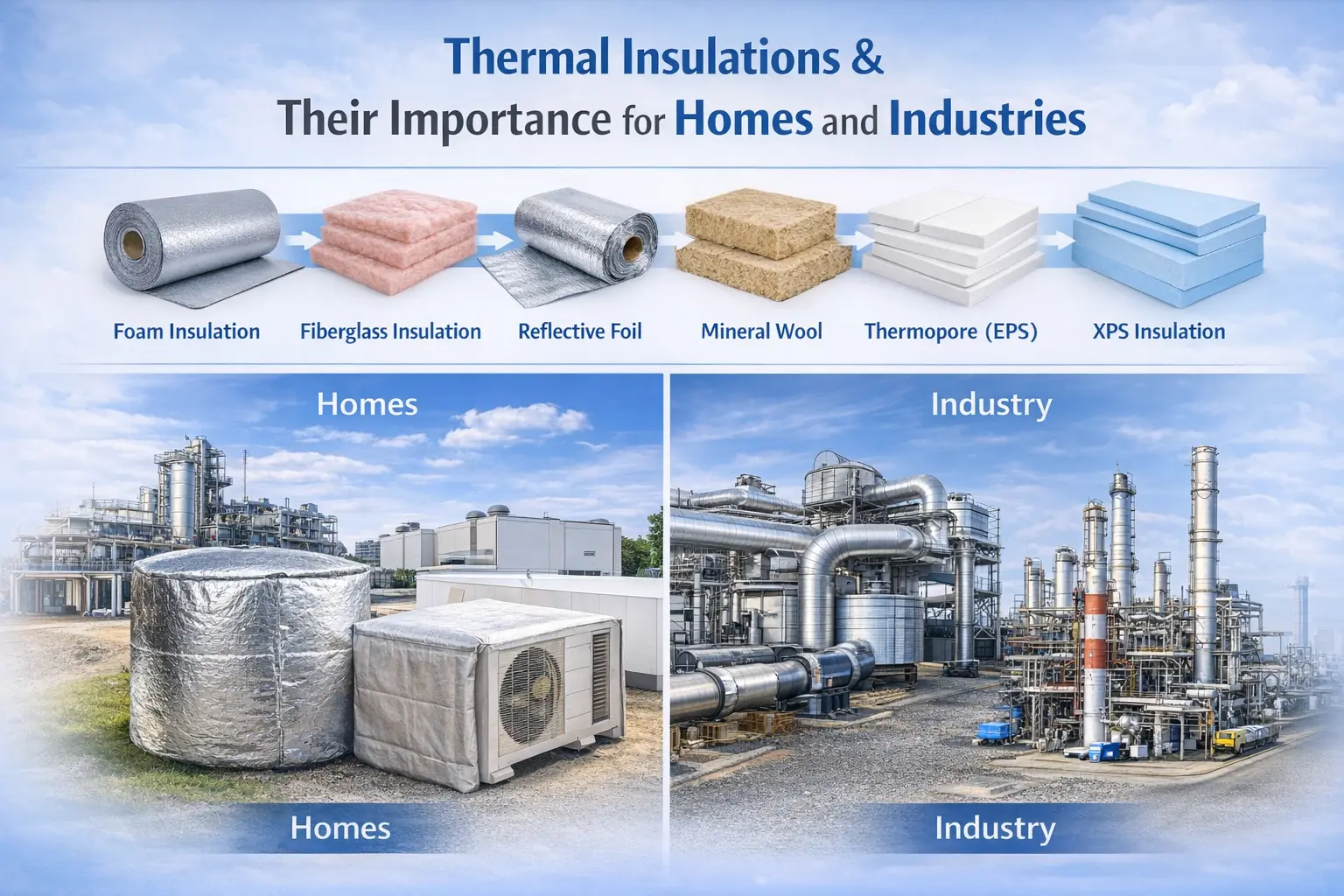
Effect of thermal insulation materials and their Importance for homes and industries is summarized in the following picture.

Common Applications of Insulation Materials
Below are the most common and practical applications where insulation plays an important role.
1- Water Storage Systems
- Overhead water tanks
- Plastic and steel tanks
- Hot water storage tanks
- Cemented Tanks
Insulation helps maintain water temperature and reduces heat gain or loss
2- Piping and Plumbing Systems
- Hot water pipes
- Cold water pipes
- HVAC pipes
- Industrial pipelines
- Chemical and oil pipelines
Pipe insulation prevents heat loss, condensation, and corrosion.
3- Air Conditioning and HVAC Systems
- AC outdoor units
- Air ducts
- Chillers
- Cooling and heating systems
Improves system efficiency and reduces electricity consumption.
4- Buildings and Construction
- Roof insulation
- Walls and ceilings
- Floors
- Warehouses
- Commercial buildings
Keeps indoor temperature comfortable and reduces cooling and heating costs.
5- Vehicles and Transportation
- Cars
- Buses
- Trucks
- Refrigerated vehicles
- Special transport containers
Reduces heat buildup and protects interiors and sensitive goods.
6- Industrial Equipment
- Boilers
- Heat exchangers
- Furnaces
- Storage vessels
- Manufacturing machines
Improves performance, safety, and equipment lifespan.
Cold Storages & Food Industry
- Cold rooms
- Freezers
- Food processing units
- Dairy and meat storage
Maintains required temperatures and reduces energy cost.
Conclusion: Thermal Insulation Is a Smart Investment
Thermal insulation is not just about comfort — it is about energy efficiency, cost savings, and long-term protection. Whether used in homes or industries, insulation improves performance, reduces expenses, and extends the life of equipment.
By understanding how insulation works and where it should be applied, you can make smarter decisions for your home or business.

Leave a Reply